
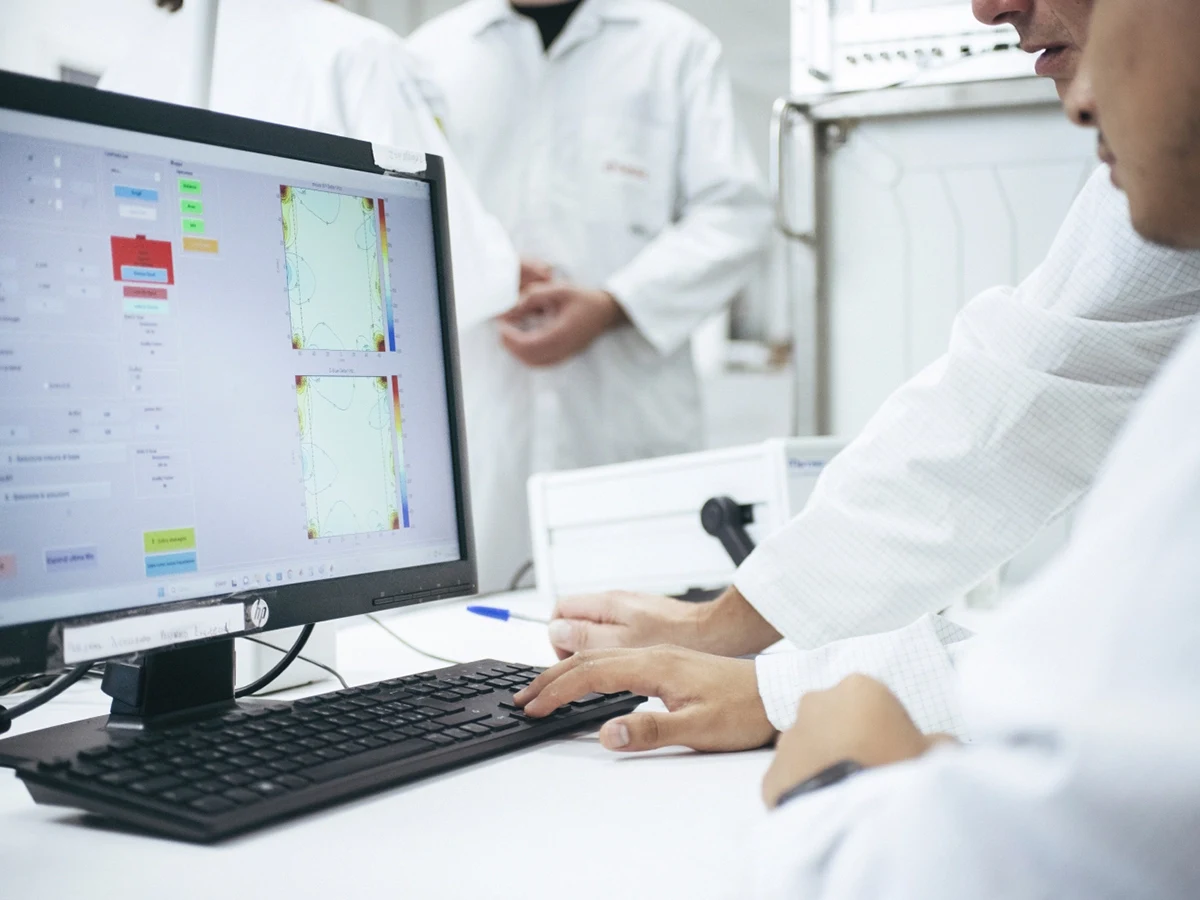
eXP Applications
eXP applications are tools that deliver information going beyond the scope of a standard examination and broaden diagnostic possibilities. They include Q-Spine and True-Motion.
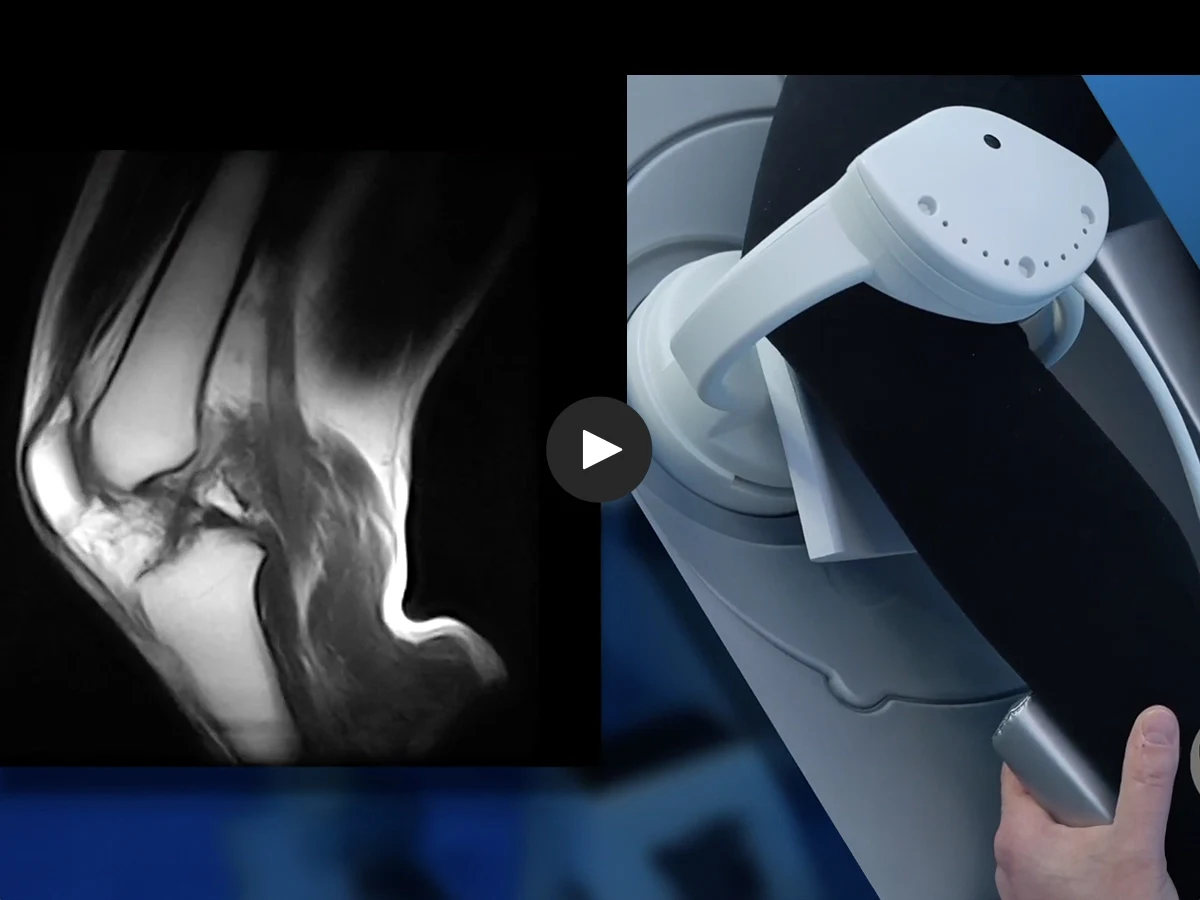
True-Motion
True-Motion is used in the imaging of pathologies that depend on body position or on movement. The sequence is performed in the same way as in a standard MRI examination, and the examination as a whole is extended by only a few minutes.
- Real-time observation of the joint in motion - information additional to the static examination, useful among other things in post-operative assessment.
- Assessment of what cannot be seen at rest - in some pathologies it is only movement in the joint that reveals the abnormality.
- Support in sports medicine - a tool that answers the specific diagnostic needs of athletes.
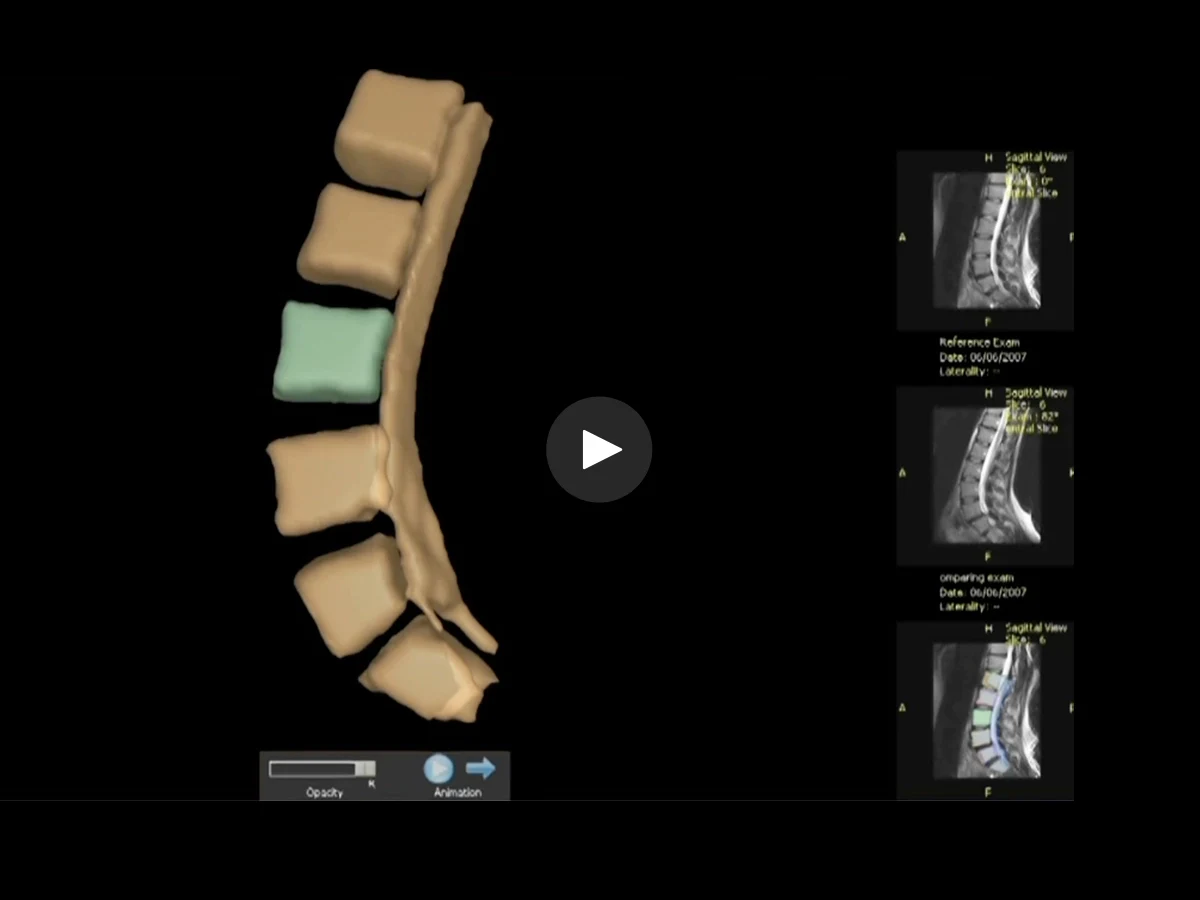
Q-Spine
Q-Spine is a tool that supports the visualisation and quantitative assessment of relative biomechanical changes. It compares an MRI examination of the spine performed under load (Weight-Bearing) with an examination in the supine position, using Fast Spin Echo T2 acquisition.
- Facilitates and simplifies the analysis of the weight-bearing examination alongside the supine examination thanks to semi-automatic segmentation of the lumbar spine.
- Provides a numerical value for the relative changes.
- Limits the influence of the human factor, so that measurements are repeatable and consistent.
- Makes it easier to follow the patient over time on the basis of numerical data.
- Increases confidence in planning surgical treatment and in spinal diagnostics.
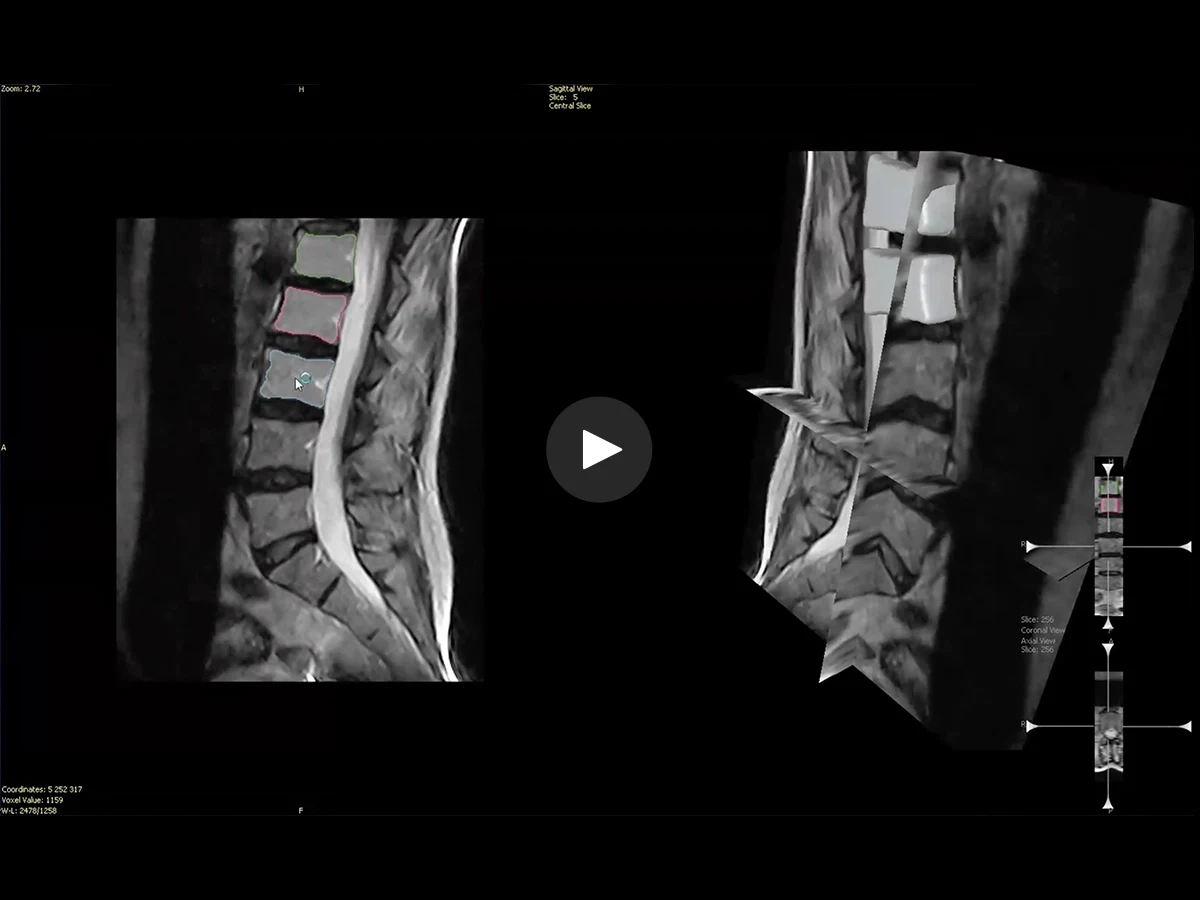
Computer-assisted calculation of parameters
- Vertebral body wedging
- Intervertebral displacement (translation)
- Spinal canal cross-section
- Intervertebral foramen surface area
- Intervertebral angles
- Spinal curvature
- Spinal canal thickness
- Listhesis index
- Vertebral body collapse